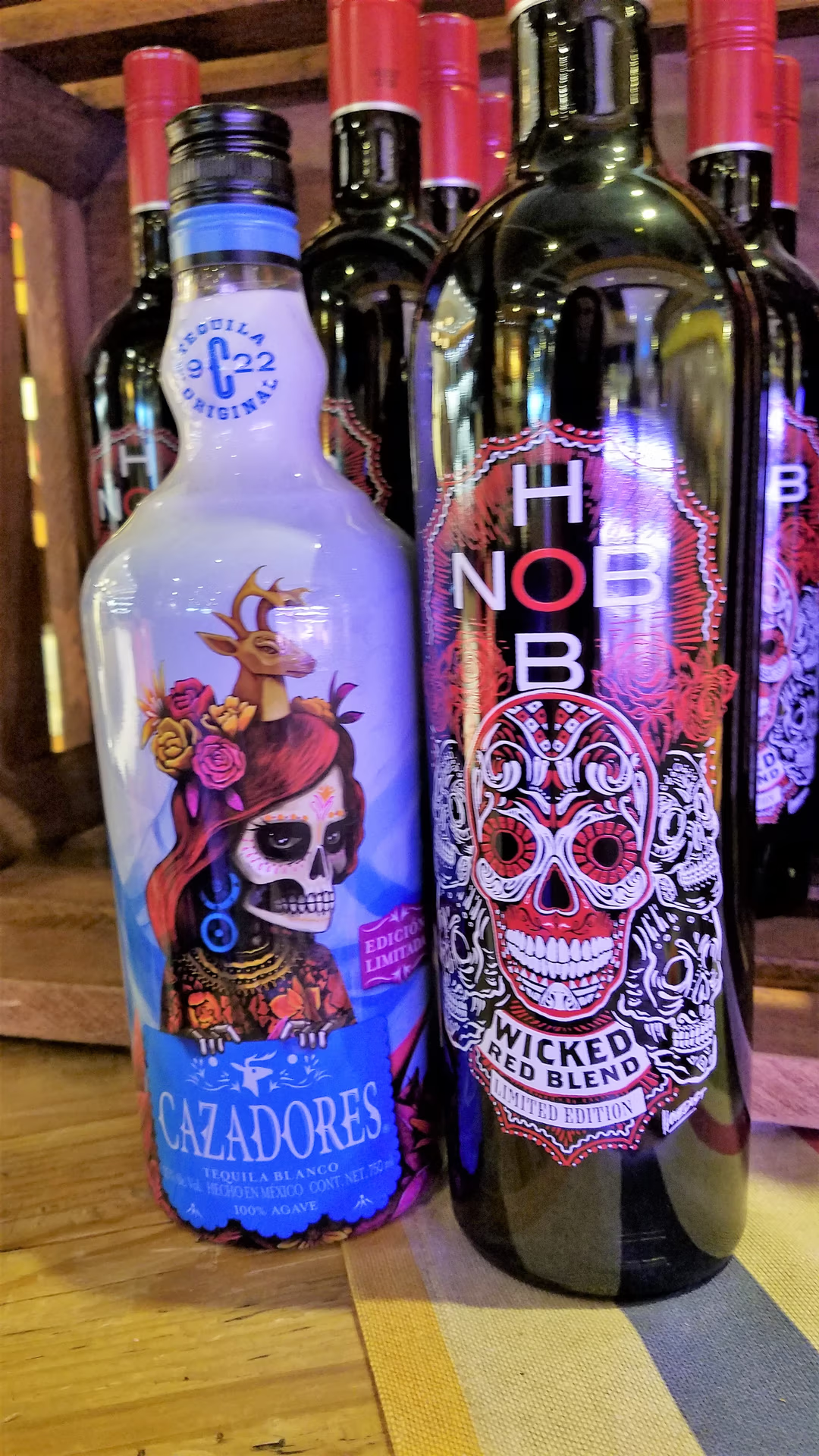
Death is celebrated in different ways all over the world. In Mexico, the deceased are celebrated loudly every year, for three straight days, with music, marigolds, and more food than you can eat. If experiencing Día de los Muertos is on your bucket list, read on for more information about this celebration, best cities, and travel tips to have the time of your life.
Disclosure: Some links may be affiliate links where we receive a super-small commission at no additional cost to you if you click through and make a purchase.

What Is Día de los Muertos, Really?
Day of the Dead isn’t a single day. It’s a three-day, sometimes 4-day celebration. Officially, it runs October 31st through November 2nd, but according to our neighborhood, it’s two days of Halloween for the kids (October 30th and 31st) and then the regular celebrations. Depending on the region, the preparation can take weeks with decorating and grave cleaning.
- October 31 (Halloween) – known elsewhere as trick-or-treat night, but also this is the day when the gates of heaven open for the souls to return. (Some neighborhoods will have trick-or-treating on October 30th and 31st)
- November 1 (All Saints’ Day) – “el Día de los Inocentes,” when deceased children are honored and welcomed back
- November 2 (All Souls’ Day) – the day adults are remembered, and the holiday most people mean when they say “Day of the Dead”
Death isn’t about sadness or fear. It’s a holiday thousands of years old, shaped over time by pre-Hispanic beliefs and Catholic influence but never losing its core belief: don’t mourn the end — celebrate the life.
Disney Taught Me About Día de los Muertos
Before living in Mexico, my only real education on Día de los Muertos came from Disney’s Coco. So, I understand what is in the back of everyone’s mind:
- Does everyone wear black?
- Are there foods specifically for Día de los Muertos?
- Is it a day of wailing and grief?
No, sort of, and no. Dress ranges from jeans to prom-dress elegant. The food is whatever the person loved eating while they were alive, but there are also bread and sugar candies designed for this celebration. The mood is closer to a family reunion than a funeral — stories, laughter, music, and a lot of walking around at night with the whole town.

The Best Places in Mexico to Experience Día de los Muertos
Practically every town and city will have a Day of the Dead celebration, but some will be more intimate orHollywood-like than others. Please remember that you are a guest observing a sacred day for the Mexican people.
Pátzcuaro, Michoacán
Lantern-lit boats carry locals and travelers across the lake to the island of Janitzio, where families gather graveside around altars they’ve spent weeks building, telling stories until sunrise.
Chignahuapan, Puebla
This pueblo mágico, better known for hand-painted Christmas ornaments, transforms for its Festival of Night and Life on November 1st, reenacting a spirit’s journey to Mictlán with fireworks, actors, and light.
San Miguel de Allende
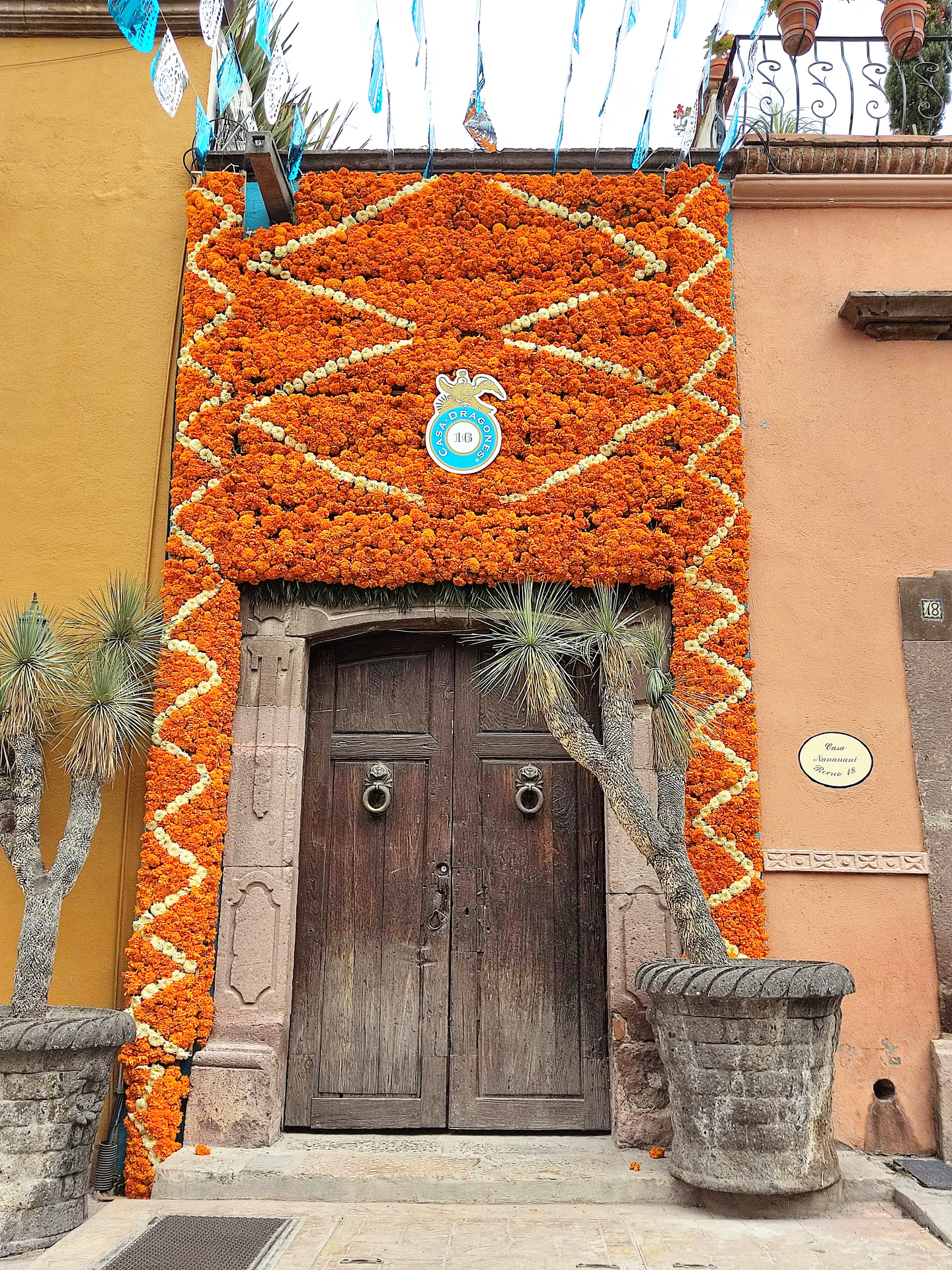
Home to La Calaca, an interactive art festival packed with workshops, live bands, and installations celebrating the artistic side of the holiday. On Día de los Muertos, you can expect face painting in the streets, marigolds around doorways, and a parade in San Miguel de Allende.
Oaxaca and Chiapas
With strong indigenous communities and over 60 dialects still spoken today, these states celebrate Oct. 30–Nov. 5 with tribal dance, ancient storytelling, and some of the most elaborate decorations in the country.
Guadalajara
The world’s only theme park dedicated to the Day of the Dead returns to Guadalajara, transforming Ávila Camacho Park into Calaverandia, an experience filled with technology, art installations, performances, live music, and traditional Mexican cuisine. Starting October 20, 2026.
Mexico City
The capital is celebrating Día de los Muertos for over a week with different parades, festivals, and other activities. The Parade of Catrinas is Oct 25th, the Day of the Dead Parade will be on Oct 31st, dress up as a catrina for the 5k and 10k Calaveritas Run through Chapultepec Park at night on Nov. 1st; and a few chocolate festivals. (2026 dates)
Travel Tip:
Book your Mexico Day of the Dead trip at least three months out — hotels sell out, and prices climb fast.
Graveyard Tour?
Not all graveyards are open to the public. Queretaro will not let people into their graveyard unless they can show proof that a family member is buried there. If visiting a graveyard during Day of the Dead is on your list, please book a tour through Get Your Guide.
Save our list of Best Places in Mexico to Experience Dia de La Muertos on Globethrivers for easy access and to plan your trip.
Our First Día de los Muertos in Querétaro
Our first Day of the Dead in Mexico back in 2018 was in Queretaro. We were still very much tourists, having lived there for less than a year by this time. We didn’t know what to expect, or even what to do.
Knowing that parking would be a nightmare, we took an Uber into the Centro historico. It was crowded, a little chaotic, and completely worth it. All the events were posted on billboards around the Centro, and we moved along with the crowds to different parts of the city.
The Casa de la Corregidora (Government Palace) drew a line to admire altars built by different neighborhoods honoring key community members. Offerings ranged from corn and chilis to Coca-Cola, tequila, and wine. Marigolds, photos, even boots and saddles decorated the altars. Hotels joined in too — Casa de la Marquesa built one of the most elaborate altars we’ve seen, right in its lobby.
Street vendors sold Halloween costumes alongside sugar skulls and candy. We stopped for huaraches and tamarind juice, though we could have eaten our way down the entire row of food stalls. Kids ran around as superheroes and catrinas, plastic pumpkins in hand, collecting candy.
Local tip: Carry candy during Day of the Dead week. Kids will come up and ask.

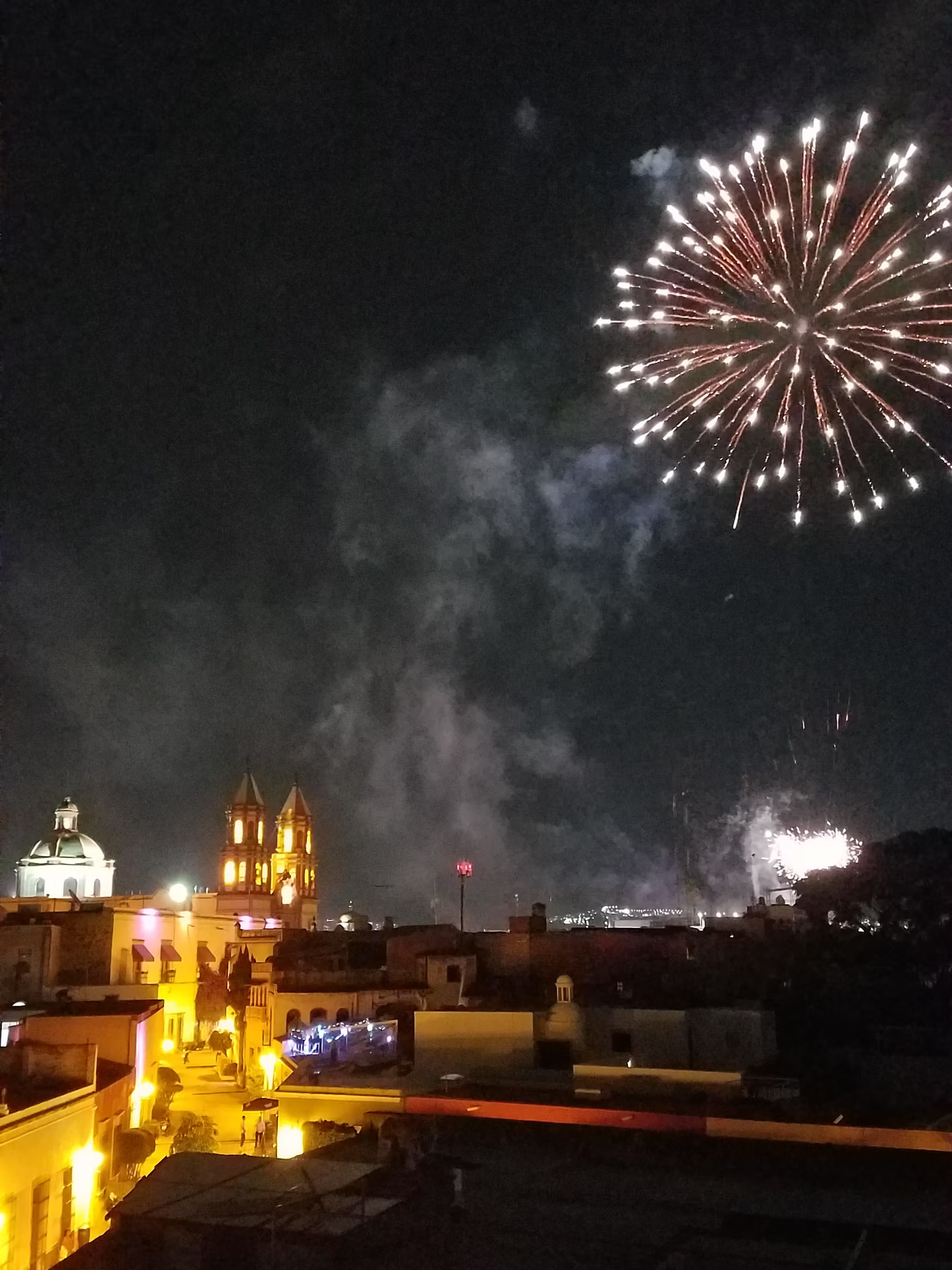
We ended the night with wine at La Terraza Grupa, the rooftop bar atop Hotel Aspeytia. The 260-degree view of church steeples is spectacular — the perfect spot to watch fireworks light up the sky. This is a celebration, after all.
We’ve celebrated Day of the Dead in Queretaro and San Miguel de Allende ever since. It’s always a special time for us.
Altars, Skulls, and Marigolds: What It All Means
Ofrendas (Altars)
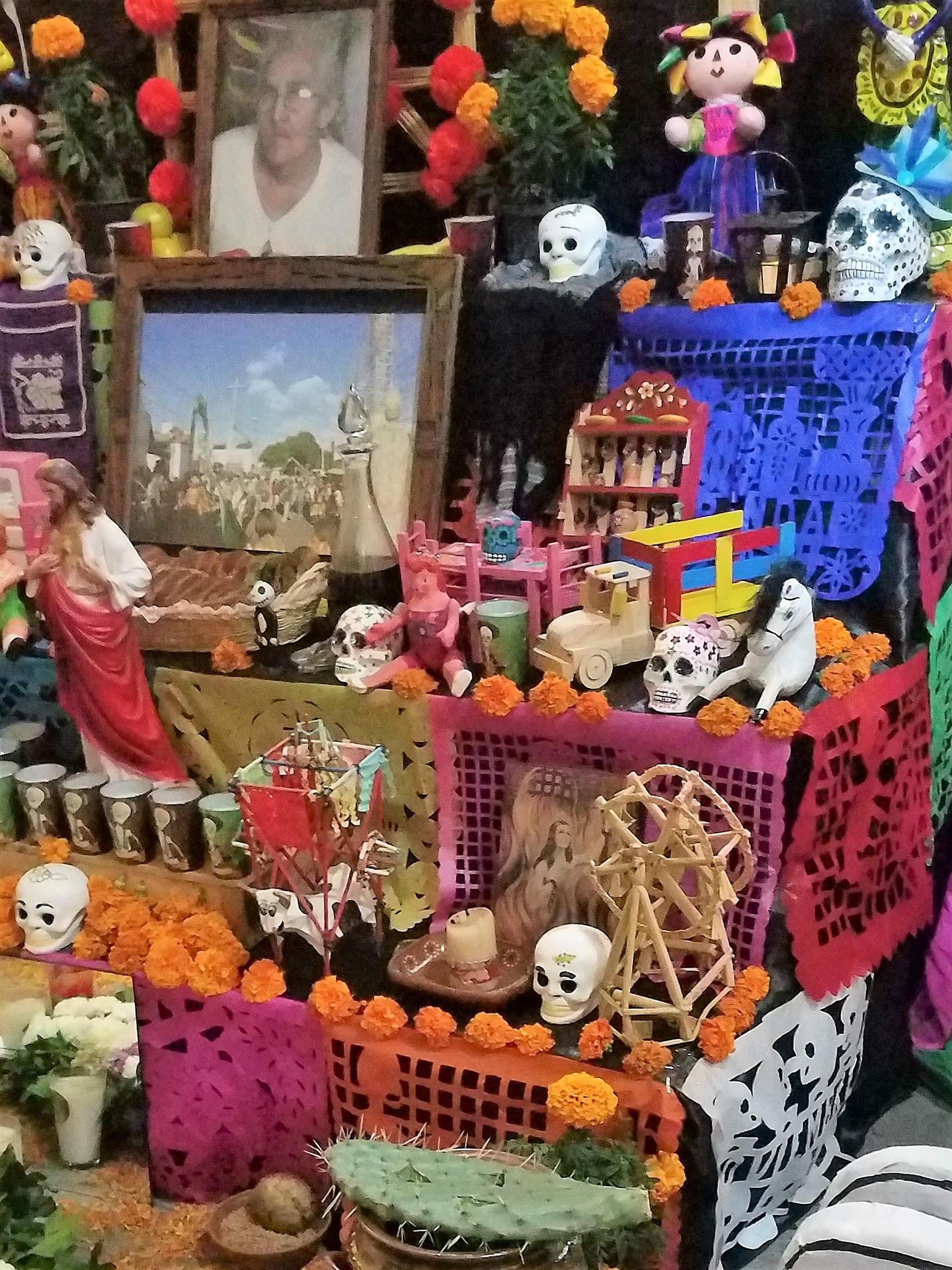
Every altar is an ofrenda — an offering. Home altars are usually one or two tiers, set with photos, food, and personal items. Public altars, often built by entire neighborhoods to honor a community figure, can stack up to seven tiers and get seriously elaborate — some towns even run altar-building contests.
As a Mexican friend once told me: most people today don’t remember every symbolic detail. What matters is the meaning — remembering someone you love, and making something beautiful for them.
Sugar Skulls & Chocolate Skulls
Yes, the candy skulls are edible, and kids especially love the chocolate ones. But the sugar skulls placed on altars aren’t meant for the living. Those are for the spirits. Buy a few, so you have some candy to give to the random kids that may ask.

Pan de Muerto
“Bread of the Dead” sounds grim, but it’s delicious. This soft, orange-kissed brioche roll, topped with sugar and shaped with crossbones, is the pastry you need to try the moment you land in Mexico in October.

Why Food Sits on the Altar for Día de los Muertos
Legend says spirits travel through nine levels to reach Mictlán, and they need fuel for the journey. Bread and fruit are staples, along with whatever the deceased loved most. We’ve seen everything from enchiladas and mole to tequila and wine set out for them. Food goes on the altar 1–3 weeks before the holiday. Whatever the spirits haven’t “eaten” by the end gets thrown out — it’s never eaten by the living.
Cempasúchil (Aztec Marigolds)
These bright orange, late-blooming flowers are believed to guide spirits home with their color and scent. You’ll see them everywhere in doorways, plazas, and on altars from October to November.
The Personal Touches
The small items on an altar tell you more details about the deceased person: ballet shoes, a cowboy hat and saddle, a favorite toy, a pipe, even an inflatable dog. Fun fact — in Aztec folklore, Xoloitzcuintli dogs were buried with their owners to help guide their spirits through the underworld.
Altars are finished off with candles, colorful tissue paper with intricate designs (papel picado), salt, seeds, and incense.
We hope you have a great time at Día de los Muertos!
Planning a trip to Mexico around Día de los Muertos? Sign up for our newsletter for more travel tips, festival guides, and the food and wine finds worth building a trip around.
